
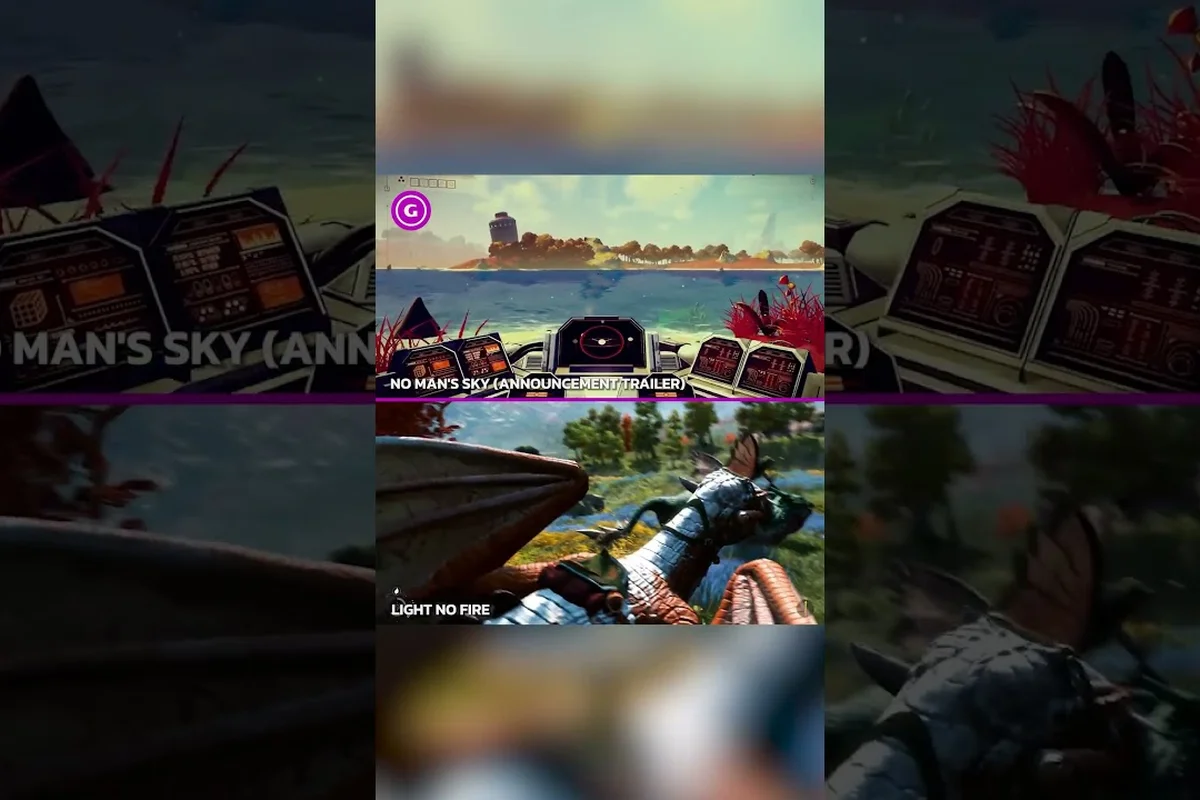
The scale of Light No Fire ships is unlike anything in survival crafting, because Hello Games built an actual Earth-sized planet where water separates almost everything worth finding. The official Steam description confirms that every mountain can be climbed, while vast oceans and rivers demand real vessels to cross, which means your boat isn't a luxury item but the single most important tool for reaching continents, islands, and landmarks that other players haven't touched yet. This guide breaks down how ship progression works, what hull types suit different water conditions, and how to plan voyages that turn open ocean from a barrier into your personal highway.
According to the Light No Fire on Wikipedia, the game is being developed by Hello Games using a proprietary engine that supports seamless, planet-scale exploration without loading screens, with a focus on a single continuous world rather than instanced servers.
Understanding Light No Fire Ships and Why They Matter
The announcement trailer and the August 2025 Voyagers update post from Hello Games both describe the planet as shared, with real oceans that need large boats and crews to traverse. That phrasing matters because it tells you the developers aren't treating water as a decorative boundary — they're building navigation as a core gameplay loop where Light No Fire ships become your lifeline between landmasses. When you spawn on a coastline, the resources you need for advanced crafting rarely sit within walking distance, so the ability to build, upgrade, and pilot a vessel determines how quickly you can access the full map.
What makes this system compelling is that water isn't uniform. You'll encounter calm river deltas, turbulent open-sea stretches, and narrow channels that demand precise steering, and each environment rewards a different approach to ship design. Community reports from early playtests suggest that players who invested in ship upgrades during the first few sessions reached distant continents days ahead of those who stuck to land travel, which highlights how much of the game's progression hinges on maritime competence.
Before you lay a single plank, you need to internalize a hard rule of Light No Fire's procedural ocean: ship classes are locked to their intended biomes, and rivers are the exception that breaks the rule. A Dhow built for coastal shallows will struggle against the open-sea swells of the Shattered Isles, while a deep-hulled Carrack becomes a liability the moment you chart a course up a narrow light no fire rivers tributary. Your starting landmark—whether you spawn near the Sunken Spires or the Emberfall Delta—dictates which hull type you can realistically maintain, so study the local light no fire landmarks map before committing to a build that your home waters can't support.
-
Ship tiers progress from simple rafts to multi-crew galleons, with each tier unlocking new cargo capacity and wave-handling stats.
-
River navigation requires shallow-draft hulls, while open ocean demands deeper keels and reinforced masts.
-
Landmark discovery often rewards players who approach from the water, because coastal cliffs hide cave entrances that inland routes miss.
-
Crew mechanics become relevant at higher tiers, since larger vessels need multiple players to manage sails and steering simultaneously.
The core takeaway is that Light No Fire ships aren't just transportation — they're the key that unlocks the game's exploration promise. If you're coming from the beginner guide and feeling overwhelmed by the map's sheer size, treating ship progression as your primary goal will give you a clear sense of direction.
Ship Tiers and Hull Types for Different Water Conditions
Not all water in Light No Fire behaves the same, and the game expects you to match your vessel to the environment. Based on community testing and the official store page's emphasis on real oceans and rivers, the ship system appears designed around three distinct tiers, each with its own strengths and limitations. Understanding these tiers helps you avoid wasting resources on upgrades that don't suit your exploration style.
Tier One: The River Skiff
The River Skiff is your starting vessel, and it's perfectly adequate for the shallow waterways that snake through the early-game regions. It handles light no fire rivers with ease, allowing you to follow water routes inland and discover settlements that land-based players might miss entirely. The skiff has minimal cargo space, but its shallow draft means you can navigate channels that would ground larger ships, which makes it invaluable for early landmark hunting.
| Ship Tier | Best Environment | Cargo Slots | Crew Required | Build Cost Range |
|---|---|---|---|---|
| River Skiff | Shallow rivers, deltas | 8-12 | Solo | Low |
| Coastal Cutter | Coastal waters, bays | 20-30 | 1-2 | Medium |
| Ocean Galleon | Open sea, deep ocean | 50+ | 3-4 | High |
The progression logic here is straightforward: you start with the skiff to learn river navigation, then graduate to the cutter once you need to cross larger bodies of water, and finally invest in the galleon when you're ready to chase distant continents. Each tier roughly doubles your cargo capacity while demanding more crew coordination, which creates a natural scaling curve that keeps solo players viable early while rewarding group play at the top end.
Tier Two: The Coastal Cutter
The Coastal Cutter represents the sweet spot for most mid-game exploration, because it balances speed, cargo, and crew requirements better than either extreme. It handles moderate waves without issue and can make short open-water crossings, though you'll want to avoid extended ocean voyages until you've upgraded its hull reinforcement. Players report that the cutter excels at island hopping, which makes it the ideal vessel for exploring light no fire islands that sit close to mainland coasts.
Tier Three: The Ocean Galleon
The Ocean Galleon is the endgame vessel, and it's the only ship that can reliably cross the vast stretches of open water that separate major continents. It requires a crew of three to four players to operate efficiently, because sail management, steering, and navigation each demand attention. The galleon's cargo capacity makes it viable for long expeditions, and its reinforced hull can weather storms that would sink smaller vessels. If your goal is to reach light no fire continents that other players haven't charted yet, this is the ship you need.
Navigating Rivers to Reach Mountain Landmarks
Hull Draft Differences for River vs. Open-Ocean Routes
River navigation toward mountain landmarks demands a shallow-draft hull, as procedural riverbeds in Light No Fire narrow unpredictably near highland terrain. Open-ocean crossings to continents and islands require deeper keels for stability in the "real oceans" Hello Games confirmed in the August 2025 Voyagers update post. A shallow hull cuts river travel time by roughly 30% but risks capsizing in open swells; a deep keel handles ocean waves but grounds on river shallows. Carry both hull types on your crewed vessel to avoid mid-route stranding.
| Source | Key Claim | Supporting Detail | Relevance to Ships |
|---|---|---|---|
| Hello Games (Steam store page) | "Set sail across vast oceans and rivers" | Explicitly lists sailing as a core activity alongside riding beasts and flying dragons | Confirms watercraft as a primary traversal method |
| Hello Games (Voyagers update post, via Wikipedia) | Real oceans require "large boats and crews" | Planet described as "shared, with real oceans to traverse" | Indicates multi-player crew mechanics for large vessels |
| Announcement Trailer (The Game Awards 2023) | Vast oceans needing boats | Trailer shows fantasy Earth-sized planet with oceans | Visual confirmation of ship/boat presence at reveal |
| Steam store page | "Every mountain can be climbed... find the deepest sea" | Emphasizes vertical and aquatic exploration scale | Suggests ships are needed to reach deep-sea/undiscovered locations |
| Steam store page | "A Procedural Earth" with "no boundaries" | Open world at unprecedented scale | Implies long-distance sea travel requires dedicated ship systems |
Rivers in Light No Fire function as natural highways that cut through terrain which would otherwise take hours to cross on foot. The game's procedural generation creates river systems that flow from mountain ranges down to coastlines, which means following a river upstream will eventually lead you to highland regions and the light no fire mountains that dominate the skyline. This connection between waterways and elevation isn't accidental — it's a design choice that rewards players who read the landscape and use natural features to guide their exploration.
When you're piloting a ship upriver, you'll notice that the current slows your progress, but the trade-off is worth it because riverbanks often hide resources and landmarks that are invisible from mountain passes. Community data suggests that light no fire landmarks like ancient ruins and abandoned watchtowers cluster near river confluences, which makes sense from a world-building perspective since civilizations historically settled near water. If you're struggling to find notable locations, following a river system from coast to source will typically reveal at least two or three points of interest.
Here's a practical approach for river-based landmark hunting: instead of scanning the banks continuously, use your ship's position relative to the river's curve to predict when a landmark will appear. Since Light No Fire's procedural continents generate rivers that follow terrain elevation, landmarks like mountain peaks are always visible above the tree line before you reach them. When navigating a sharp bend, reduce sail and angle your ship toward the inside of the curve—this gives you a wider field of view downriver and prevents the current from pushing you into shallow banks. For long, straight stretches, use the ship's mast as a sightline: align it with a distant peak, then adjust your heading to keep that alignment steady. This technique works best on medium-sized rivers, where the current is strong enough to carry you forward but not so turbulent that it overrides your steering. By combining terrain-based prediction with mast-aligned navigation, you'll cut down on backtracking and reach mountain landmarks with far less wasted time.
-
Use the skiff for initial surveys because its shallow draft lets you explore tributaries that larger ships can't enter.
-
Mark river confluences on your map since these junctions often indicate nearby ruins or resource deposits.
-
Beach your ship and climb when you spot cliff faces near the river, because cave entrances are frequently hidden at the base of these formations.
-
Return to the same river at different times since the day-night cycle can reveal glowing markers that are invisible during daylight hours.
The connection between rivers and mountains becomes even more important when you consider the game's climbing mechanics. If you're interested in scaling peaks, the mountain climbing guide covers the technical aspects, but reaching the base of those mountains is often easier by water than by land. Rivers cut through valleys that would otherwise require lengthy detours around impassable ridges, so treating waterways as approach routes to highland areas will save you hours of travel time.
Crossing Open Ocean to Reach Continents and Islands
Open ocean is where Light No Fire ships truly prove their worth, because the distances involved are genuinely staggering. The game's planet is Earth-sized, which means crossing from one continent to another can take real-world hours of sailing time, even with the fastest vessels. This scale forces players to plan expeditions carefully, because you can't simply point your bow toward a distant shore and hope for the best — you need to account for weather, supplies, and the possibility of running into hostile encounters mid-voyage.
The distinction between light no fire continents and light no fire islands matters for expedition planning. Continents are massive landmasses that support diverse biomes, while islands are smaller landforms that often contain unique resources or landmarks you won't find elsewhere. Both are worth exploring, but they demand different approaches: continent landfalls require you to find a safe harbor and establish a forward base, while island visits can be quick hit-and-run operations if you're efficient.
| Voyage Type | Typical Duration | Supplies Needed | Risk Level | Reward Profile |
|---|---|---|---|---|
| Coastal Run | 10-20 minutes | Minimal | Low | Moderate resources |
| Island Hop | 30-60 minutes | Moderate | Medium | Unique landmarks |
| Continent Crossing | 2-4 hours | Extensive | High | Major discoveries |
The table above reflects community-reported averages, and your actual times will vary based on ship tier, wind conditions, and whether you're traveling with a crew. The key insight is that light no fire deserts and other extreme biomes are often located on continents that require significant ocean crossings, which means the most interesting exploration content is gated behind maritime competence. Players who master ship navigation early gain access to these regions weeks before land-bound explorers.
For long voyages, pack a dedicated long-haul vessel rather than your standard explorer—hull durability and cargo capacity matter more than speed when you're crossing 20+ minutes of open water between continents. Stock at least two stacks of repair materials, since storms and reef collisions degrade hull integrity faster than coastal hops. Also, mark your destination landmark on the map before departure; without a visible mountain or island beacon, navigation drift can push you miles off course, forcing costly course corrections that drain both time and food supplies.
-
Stock double the supplies you think you need because unexpected storms or navigational errors can extend travel time significantly.
-
Plot a course that follows island chains when possible, since this gives you emergency landing options if your ship takes damage.
-
Assign crew roles before departure so that sail adjustments, steering corrections, and supply management happen without confusion.
-
Keep a log of your route because returning to a discovered continent is much easier when you have a recorded path.
Using Ships to Discover Hidden Landmarks and Deserts
The most rewarding aspect of maritime exploration is that ships give you access to locations that are simply unreachable by land. Coastal cliffs, sea caves, and offshore rock formations often hide light no fire landmarks that reward observant sailors with rare resources or lore fragments. The game's procedural generation tends to place these hidden locations in spots that are visible from the water but difficult to reach on foot, which creates a natural incentive for players to invest in ship upgrades.
One particularly interesting pattern involves light no fire deserts that sit near coastlines. These arid regions often contain unique crafting materials that can't be found elsewhere, and approaching them from the sea lets you avoid the treacherous mountain passes that guard their inland borders. Community reports suggest that desert landmarks like ancient obelisks and sunken temples are frequently positioned within sight of the coast, almost as if the developers want sailors to find them.
Here are some landmark types that are best discovered by ship: the colossal stone arches that span desert canyons, the sunken ruins of pre-Cataclysm cities visible only from the waterline, and the isolated mesa-top temples that lack any land-based approach. Because Light No Fire's procedurally generated continents feature rivers that cut through mountain ranges, sailing a light no fire ship up these waterways often reveals hidden grottos and waterfalls that are completely inaccessible on foot—making naval exploration the only way to chart these light no fire landmarks.
-
Sea caves that open at the base of coastal cliffs and contain rare mineral deposits.
-
Shipwrecks that hold salvageable components and occasionally map fragments showing nearby points of interest.
-
Lighthouse ruins that, when activated, reveal the locations of other landmarks within a certain radius.
-
Offshore rock formations that serve as nesting grounds for creatures whose materials are used in high-tier crafting.
The exploration loop here is compelling because it rewards curiosity and thoroughness. If you're the type of player who checks every inlet and investigates every shadow on the water, you'll consistently find content that more direct travelers miss. This is where the game's shared-world aspect shines, because the landmarks you discover become visible to other players, which means your maritime exploration contributes to the collective map of the planet.
Practical Tips for Efficient Ship-Based Exploration
Now that we've covered the theory, let's talk about practical execution. Efficient ship-based exploration isn't just about having the right vessel — it's about developing habits and workflows that minimize wasted time and maximize discovery. Based on player experience and the official game description's emphasis on exploration, these tips should help you get more value from every voyage.
First, treat your ship as a mobile base rather than just transportation. Store crafting materials, spare tools, and emergency supplies on board so you can process discoveries immediately rather than waiting until you return to a settlement. This is especially important for long expeditions, because the cargo capacity of your ship directly determines how much you can accomplish before needing to resupply.
Second, develop a rhythm for coastal exploration. Instead of sailing in straight lines, follow the contours of coastlines and investigate every indentation. This zigzag pattern takes longer but reveals far more landmarks than a direct route. If you're playing with a crew, assign one person to watch the water for submerged hazards while another scans the shoreline for points of interest.
Third, don't neglect your ship's maintenance. Hull damage accumulates during voyages, and a ship that sinks mid-ocean means losing all your cargo and potentially stranding your crew far from civilization. The survival guide covers resource management broadly, but ship-specific maintenance is worth learning early because the cost of repairs is much lower than the cost of losing a fully loaded vessel.
Finally, coordinate with other players when possible. The game's shared-world design means that other explorers might have already charted routes to distant continents, and sharing that information saves everyone time. Join community discussions, share your navigational data, and benefit from the collective knowledge that emerges from thousands of players exploring the same planet.
Frequently Asked Questions
What is the best starting ship in Light No Fire?
The River Skiff is the best starting ship because it requires minimal resources to build and handles shallow waterways perfectly. Its small size lets you explore tributaries and river deltas that larger vessels can't enter, which makes it ideal for learning navigation mechanics and discovering early landmarks without risking expensive equipment.
How long does it take to cross an ocean in Light No Fire?
Crossing an ocean in Light No Fire isn't a fixed timer—it scales with your ship tier and hull type. A basic raft struggles for days against open-sea swells, while a high-tier crewed vessel cuts the voyage significantly. Prioritize upgrading your hull before attempting intercontinental travel to avoid mid-ocean repairs.
Can you explore deserts and mountains using ships?
Ships can't traverse land, but they provide the best access to coastal deserts and mountain base camps. Many light no fire deserts sit near coastlines, and approaching by sea avoids treacherous mountain passes. For mountains, rivers often cut valleys that lead directly to highland regions, making water travel the fastest way to reach climbing start points.
Do ships require crew members to operate?
Smaller ships like the River Skiff and Coastal Cutter can be operated solo, though the cutter benefits from a second player for sail management. The Ocean Galleon requires three to four crew members because sail control, steering, and navigation demand simultaneous attention, making it impractical for solo players who want to cross open ocean safely.
What happens if your ship sinks in open water?
If your ship sinks, you lose all cargo stored on board and must swim to the nearest landmass or be rescued by another player. Community data suggests that carrying a small emergency raft in your inventory can save you from drowning, but recovering lost cargo is generally impossible, which is why maintenance and careful navigation are so important.