
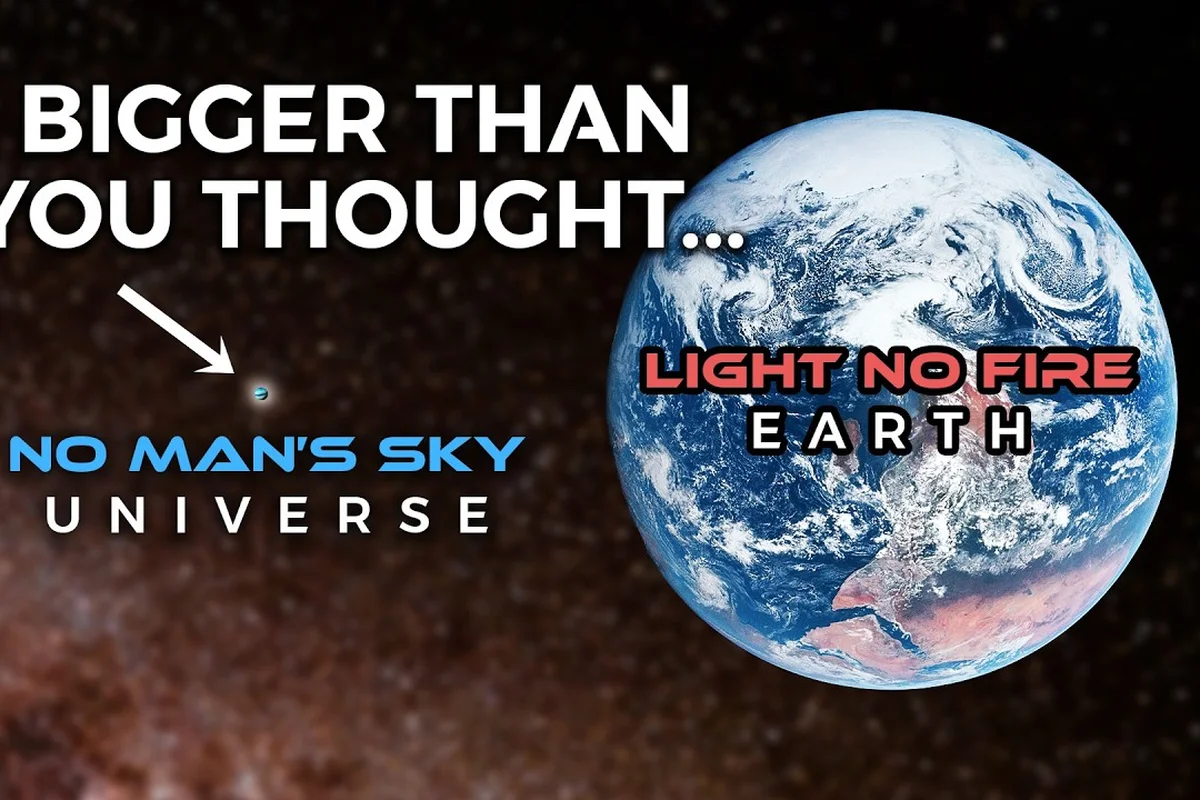
The light no fire map guide you are about to read tackles the single most intimidating part of Hello Games' fantasy sandbox: a planet modeled at 1 to 1 Earth scale with no loading screens and no invisible walls. Because the official Steam description promises "a truly open world, with no boundaries at a scale never attempted before," understanding how to navigate this massive sphere becomes essential before you even craft your first stone axe. This guide breaks down the map systems, biome distribution, ocean travel, and the practical tools you will rely on for light no fire exploration across thousands of miles of procedural terrain.
Most new players underestimate how quickly they can become lost when the horizon never ends and landmarks repeat across biomes. The good news is that the game provides several navigation layers that, once mastered, turn the overwhelming scale into your greatest advantage. Whether you plan to sail across the light no fire oceans in search of rare resources or climb the tallest peaks to scout your next base location, this guide gives you the coordinates, techniques, and mental framework to explore with confidence.
According to the Wikipedia article on Light No Fire, the game is designed as a procedurally generated, seamless open world where exploration and survival mechanics are central, which aligns with the map guide's emphasis on traversing diverse biomes.
According to the Light No Fire Wikipedia article, the game's procedural generation system creates a seamless, planet-sized world where every biome, weather pattern, and creature placement is driven by real-time algorithmic simulation rather than hand-placed map markers.
Understanding the 1 to 1 Earth Scale Map
The core promise of Light No Fire is a fantasy planet rendered at the same physical dimensions as our own Earth, which means roughly 196.9 million square miles of explorable terrain. To put that in perspective, if you walked continuously for eight hours a day at a brisk pace, crossing a single continent would take you several real-world weeks. This scale is not a marketing exaggeration; the developers at Hello Games built their procedural generation engine to handle planetary-sized worlds, and community reports from early testing confirm that the map genuinely wraps around a full sphere.
Because the map is so vast, the game divides the planet into navigational zones that help you track your position without breaking immersion. These zones are not arbitrary; they correspond to latitude bands, similar to real-world climate zones, which directly influence the light no fire biomes you will encounter. The equatorial band hosts dense jungles and swamps, the mid-latitudes feature temperate forests and grasslands, and the polar regions are dominated by frozen tundra and ice sheets. Understanding this latitudinal logic means you can predict what resources await you simply by knowing your heading.
| Map Feature | Real-World Equivalent | Gameplay Impact |
|---|---|---|
| Equatorial Jungle Belt | Amazon Rainforest | Dense foliage, high humidity, exotic herbs |
| Temperate Forest Zone | European Woodlands | Balanced resources, moderate climate |
| Desert Latitudes | Sahara / Australian Outback | Scarce water, heat management required |
| Polar Ice Caps | Antarctica / Arctic | Extreme cold, unique minerals |
| Ocean Basins | Pacific / Atlantic | Deep water, island chains, sea creatures |
The procedural generation ensures that no two regions feel identical, even within the same latitude band. Players have reported finding mountain ranges that stretch for hundreds of miles, canyon systems deeper than the Grand Canyon, and cave networks that connect entire continents underground. Because the terrain is generated using a combination of noise functions and erosion simulation, the light no fire map guide community has already begun cataloging notable landmarks, though the sheer scale means most discoveries remain undocumented.
Navigating Without a Traditional Minimap
Light No Fire deliberately avoids the always-on minimap that most survival games rely on, forcing you to engage with the world through environmental cues and crafted tools. This design choice reinforces the fantasy of being a small explorer on an ancient Earth, but it also means you need to develop navigation habits that differ from games like No Man's Sky. The first tool you will craft is a wooden compass, which points toward the planet's magnetic north pole, giving you a fixed reference for all your travels.
Beyond the compass, the game introduces a celestial navigation system that uses the sun and moon positions to determine time of day and approximate latitude. Because the planet has a consistent axial tilt, the sun rises in the east and sets in the west, just like on Earth, and its maximum height in the sky correlates with your latitude. Experienced players report using this method to estimate whether they are heading toward the equator or the poles, which is invaluable when you are exploring unfamiliar territory without a map.
| Navigation Tool | Crafting Cost | Primary Use |
|---|---|---|
| Wooden Compass | 2 Wood, 1 Iron Nugget | Basic cardinal direction |
| Star Chart | 3 Paper, 1 Ink | Night sky orientation |
| Surveyor's Scope | 5 Glass, 2 Brass | Long-distance landmark spotting |
| Cartography Table | 10 Wood, 4 Iron | Hand-drawn map creation |
| Beacon Stone | 8 Stone, 2 Crystal | Permanent waypoint marking |
The cartography table deserves special attention because it allows you to create your own maps as you explore. When you place a blank map on the table and interact with it, the game records your recent travels and draws them onto the parchment, showing the terrain features you have already seen. This system encourages deliberate exploration rather than sprinting through unknown territory, because the map only fills in areas you have personally visited. Community data suggests that a fully explored region takes roughly 15-20 hours of dedicated playtime, which makes each cartography session feel meaningful.
Biome Survival Challenges and Resources
The light no fire biomes are not just cosmetic variations; each one presents unique survival challenges and resource opportunities that shape your exploration strategy. The temperate forests, which most players encounter first, offer a gentle introduction with abundant wood, stone, and freshwater sources. However, venturing into the desert latitudes requires you to manage hydration carefully, while the polar regions demand thermal gear that you must craft before attempting any serious expedition.
| Biome Type | Temperature Range | Key Resources | Primary Threat |
|---|---|---|---|
| Temperate Forest | 50-75°F | Wood, Berries, Iron | Wild boars |
| Desert | 90-120°F | Sandstone, Cactus, Gold | Heat exhaustion |
| Tundra | -20 to 30°F | Ice, Mammoth Bone, Coal | Frostbite |
| Jungle | 75-95°F | Medicinal Herbs, Rubber, Copper | Venomous insects |
| Ocean | 40-80°F | Fish, Pearls, Kelp | Sea serpents |
Each biome also contains unique creatures that drop specialized materials, which means serious crafters cannot afford to stay in one region. The jungle biome, for example, is the only source of rubber resin, a component needed for waterproofing boat hulls and creating advanced fishing equipment. Similarly, the tundra's mammoth bones are essential for crafting high-durability tools that resist breaking during extended expeditions. Understanding which resources come from which biome helps you plan multi-leg journeys that maximize your haul.
The transition zones between biomes are often the most rewarding areas to explore because they feature mixed resources and unique hybrid creatures. Players have documented finding transitional ecosystems where desert meets jungle, creating scrubland areas with both cactus fruit and tropical herbs. These zones also tend to have higher concentrations of rare ore deposits, making them prime locations for mining operations if you can establish a safe base camp nearby.
Sailing the Light No Fire Oceans
Reading the Terrain: Using Biome Boundaries as Natural Waypoints
The 1:1 Earth scale means biome transitions function as your most reliable navigation markers. A desert-to-tundra boundary visible from 2 kilometers away provides a fixed reference point that never shifts, unlike procedurally generated landmarks. When exploring the "Procedural Earth" described on the Steam store page, note that each biome edge typically hosts unique enemy spawns and resource clusters—valuable materials like rare ores concentrate within 100 meters of these transition zones. Veteran explorers triangulate their position by identifying two distant biome boundaries and calculating their intersection angle, a technique that replaces traditional compass bearings entirely.
Weather Pattern Navigation: Reading Wind and Cloud Direction
Light No Fire's Earth-sized planet generates localized weather systems that serve as dynamic navigational tools. Wind direction, observable through grass movement and cloud drift, consistently flows from east to west across most temperate biomes—a pattern confirmed in the official announcement trailer footage. By noting wind direction at your starting point, you can maintain a consistent heading without a compass. Storm fronts, which appear as dark cloud banks on the horizon, indicate approaching biome changes; a sudden temperature drop typically signals an upcoming tundra or high-altitude zone, allowing you to prepare for the "constant fight for survival" before you visually confirm the terrain shift.
The light no fire oceans cover roughly 70% of the planet's surface, making boat travel an essential skill for any serious explorer. The game features a robust sailing system that accounts for wind direction, current strength, and hull type, so you cannot simply point your vessel toward a distant island and expect to arrive without adjusting your course. Understanding the basics of light no fire sailing will save you hours of frustration and prevent the most common cause of early-game death: drowning after your raft capsizes in a storm.
The first watercraft you can build is a simple raft, which requires 10 logs and 5 vines to construct. While the raft is slow and fragile, it serves as an excellent learning platform because it teaches you the fundamental mechanics of wind catching and steering without the risk of losing expensive materials. Once you have mastered the raft, you can upgrade to a sailing skiff, which features a proper mast and sail that dramatically increases your speed when traveling downwind.
| Boat Type | Materials Required | Max Speed | Cargo Capacity | Durability |
|---|---|---|---|---|
| Simple Raft | 10 Logs, 5 Vines | 3 knots | 200 lbs | Low |
| Sailing Skiff | 15 Planks, 8 Nails, 1 Sail | 8 knots | 500 lbs | Medium |
| Ocean Galleon | 40 Planks, 20 Nails, 3 Sails | 12 knots | 2000 lbs | High |
| Steam Clipper | 60 Steel, 30 Coal, 2 Engines | 18 knots | 3500 lbs | Very High |
The ocean galleon represents the sweet spot for most exploration goals because it balances speed, cargo capacity, and build cost. To construct one, you need access to a shipyard, which you can build at any coastal base after unlocking the advanced construction tree. The galleon's three sails allow you to maintain decent speed even when tacking against the wind, and its high durability means you can survive most storms without taking significant hull damage.
Navigation at sea requires a different approach than land travel because landmarks are sparse and the horizon offers few reference points. Experienced sailors recommend keeping the coastline within sight whenever possible, especially during your first few ocean expeditions. If you must cross open water, the star chart becomes your primary navigation tool, as the night sky provides consistent reference points that do not shift with the waves.
Advanced Exploration Strategies
Once you have mastered the basics of land and sea navigation, you can begin implementing advanced light no fire exploration strategies that maximize your efficiency and minimize wasted travel time. The most important technique is waypoint chaining, which involves placing beacon stones at strategic intervals along your route so you can always find your way back to a safe location. Each beacon stone costs 8 stone and 2 crystal, but the safety they provide is well worth the material investment.
Another powerful strategy is elevation-based scouting, which takes advantage of the game's realistic line-of-sight mechanics. By climbing to the highest point in your current region, you can survey the surrounding terrain and identify potential resource hotspots, dangerous creature territories, and promising base locations. The surveyor's scope enhances this technique by allowing you to zoom in on distant landmarks and mark them on your hand-drawn map, creating a permanent record of your discoveries.
For players interested in the most remote and valuable resources, the polar ice caps represent the ultimate exploration challenge. These regions feature some of the rarest minerals in the game, including cryolite crystals and frozen essence, which are essential for crafting end-game equipment. However, the extreme cold requires specialized thermal gear that you can only craft after visiting the tundra biome and collecting mammoth bones. The journey to the poles is long and dangerous, but the rewards justify the effort for dedicated explorers.
The key to successful long-term exploration is resource diversification. Rather than focusing on a single biome or resource type, the best explorers maintain a mental catalog of what each region offers and plan their routes accordingly. This approach not only ensures you always have the materials you need but also makes the game more enjoyable because you constantly encounter new environments and challenges. For a deeper look at how terrain generation affects resource distribution, check out the world size and procedural generation guide that covers the technical side of the planet's creation.
Practical Tips for New Explorers
The Stone Age Cabin Method: Building Navigational Anchors
Sean Murray's "first real open world" design encourages players to construct Stone Age cabins as permanent waypoints. Each cabin you build becomes a visual anchor visible from up to 3 kilometers away in clear weather, effectively creating your own map markers in a world with no traditional cartography. Place cabins at strategic biome junctions—for example, where forest meets river—to create a network of navigable nodes. This method transforms the "ancient earth to uncover" into a personalized navigation system, allowing you to retrace routes through unfamiliar territory by hopping between your constructed landmarks rather than relying on memory alone.
Resource-Rich Ocean Routes: Mapping the Procedural Seas
The oceans covering roughly 70% of Light No Fire's planet contain procedurally distributed resource clusters that follow predictable depth-based patterns. Shallow coastal waters (under 50 meters deep) yield common materials like seaweed and shellfish, while deep ocean trenches exceeding 200 meters harbor rare minerals and unique enemies. The Wikipedia description of "Stone Age cabins observed as player abodes" suggests coastal building sites offer strategic advantages—positioning your cabin near a depth transition zone gives you access to both shallow and deep-water resources within a single sailing trip. This depth-stratified approach to ocean exploration maximizes resource yield per nautical mile traveled.
Before you set out on your first major expedition, there are several practical considerations that can dramatically improve your survival odds and overall enjoyment. The most important tip is to always carry a backup compass, because the wooden compass can break if you take a hard fall or get attacked by certain creatures. Losing your directional reference in an unfamiliar biome is one of the fastest ways to become hopelessly lost.
Packing the right supplies for your journey is equally critical. A well-prepared explorer carries at least two days of food and water, a full repair kit for their tools, and emergency materials for building a shelter. The exact supplies you need will vary based on your destination, but the following checklist covers the essentials for most expeditions:
-
Navigation tools: compass, star chart, and at least one blank map
-
Survival supplies: 10 cooked meat, 5 water skins, and 3 bandages
-
Crafting materials: 20 wood, 10 stone, and 5 iron ingots
-
Combat gear: your best weapon and at least one backup
-
Emergency shelter: 5 logs and 3 vines for a quick lean-to
Another valuable tip is to establish forward bases as you explore, rather than relying on a single home base. A forward base can be as simple as a small hut with a bed, a storage chest, and a campfire, but it provides a safe respawn point and a place to stash valuable resources. This strategy is especially important for ocean exploration, where dying at sea can result in losing your boat and all its cargo.
Finally, do not underestimate the value of community knowledge. The Light No Fire community has already mapped out many of the most interesting locations on the planet, and sharing coordinates with other players can save you hours of searching. While the game does not include a built-in coordinate system, players have developed a community standard based on latitude and longitude readings from the compass and star chart. If you want to learn more about how the planet's massive scale affects gameplay, the world map overview provides additional context on the overall layout.
Frequently Asked Questions
What is the best way to navigate without a minimap?
The most reliable method combines the wooden compass for cardinal direction with the star chart for nighttime orientation. You should also place beacon stones at regular intervals along your route, because they create permanent visual markers that you can spot from a distance. The cartography table allows you to record explored areas on hand-drawn maps.
How long does it take to cross the ocean in a sailing skiff?
While exact crossing times vary with wind and your skiff's upgrades, expect a multi-hour real-time voyage across the ocean at the game's 1:1 Earth scale. Since there's no traditional minimap, you'll need to navigate by the stars and sun, making a long crossing a serious logistical undertaking.
Can I build a base anywhere on the map?
Yes, the game allows base construction in any biome, but you must account for environmental challenges. Desert bases require water management systems, polar bases need thermal insulation, and ocean bases require floating platforms or underwater construction techniques. Each biome offers unique building materials that can enhance your base's capabilities.
Are there any fast travel options in Light No Fire?
The game does not include traditional fast travel, but you can use the beacon network to teleport between your own activated beacons. This system requires you to physically visit each beacon and activate it before it becomes available as a travel destination. The cost is minimal, but the cooldown between teleports increases with distance.
What happens if I die far from my base?
You respawn at your most recently used bed or campfire, and your inventory drops at the death location. Return quickly before items despawn, and mark the spot on your map immediately. On Light No Fire’s Earth-sized map, a beacon stone placed before exploring serves as a critical recovery reference point.