
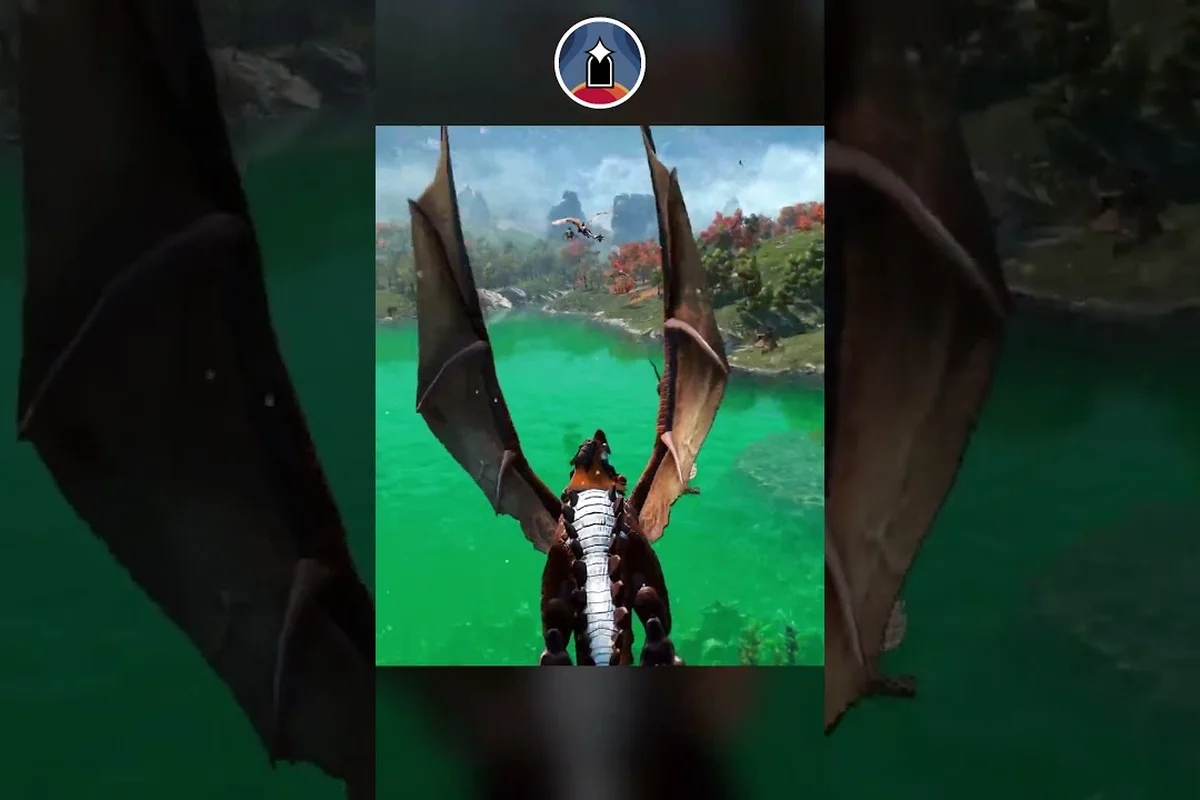
The Steam listing for Light No Fire promises a world where you can "ride wild beasts through fantastical landscapes" and "fly dragons over undiscovered landscapes," which makes figuring out the light no fire creatures to ride one of the most exciting early goals for any explorer. Because the game drops you onto a procedurally generated planet at a scale never attempted before, knowing which animals are worth taming, how the taming process works, and where to hunt for the most impressive mounts will save you dozens of hours of trial and error. This guide breaks down the confirmed creature types, the equipment you need, and the strategies that turn a wild animal into a loyal companion.
Why Mounts Define the Survival Loop
The taming system in Light No Fire sits at the heart of the survival loop, because mounts are not just cosmetic additions but essential tools for covering the vast distances between biomes. According to the official Light No Fire Steam page, the planet is a "procedural Earth" with "no boundaries at a scale never attempted before," which means walking everywhere is simply not viable once you start exploring beyond your starting valley. Taming gives you a sustainable travel solution that scales with your progression.
The core loop for light no fire animal taming follows a pattern that players familiar with survival games will recognize, but with a few twists unique to Hello Games' design philosophy: rather than a simple knockout-and-feed system, taming is tied to the procedural generation of each world seed, meaning the temperament and preferred food of a light no fire creature to ride can shift dramatically between biomes. For example, a wild wyvern found near volcanic dragon locations may require fire-resistant bait and a multi-stage bonding ritual, whereas a plains-dwelling herbivore might only need a steady supply of its native flora. This forces players to adapt their light no fire taming guide approach on the fly, rewarding exploration over rote memorization, and directly feeds into the game's emphasis on discovery-driven progression.
-
Observation phase: You must study the creature's behavior from a distance to learn its preferred food and its aggression triggers
-
Approach phase: Moving too quickly or directly toward a wild beast will spook it, forcing you to restart the process
-
Feeding phase: Offering the correct food item builds trust, but the wrong item can trigger an attack
-
Saddle phase: Once trust is established, you need the appropriate light no fire mount equipment to actually ride the creature
-
Bonding phase: Riding regularly increases the bond level, which improves speed, stamina, and responsiveness
What makes this system particularly interesting is that light no fire beast taming appears to be tied to the creature's species and biome origin. A creature native to a frozen tundra will have different dietary needs than one from a desert region, and community reports from the Light No Fire Announcement Trailer suggest that the rabbit-like people shown in the footage may have unique taming interactions with certain species.
The Trust Meter and Taming Difficulty
Every tameable creature in Light No Fire has a hidden trust meter that fills as you perform positive actions and drains when you make mistakes. The difficulty of filling this meter varies dramatically between species, which is why a proper light no fire taming guide needs to address difficulty tiers rather than treating all animals equally.
| Creature Class | Trust Fill Rate | Food Sensitivity | Aggression Risk | Best Approach |
|---|---|---|---|---|
| Small herbivores | Fast | Low | Very Low | Direct feeding |
| Large herbivores | Moderate | Medium | Low | Slow approach + repeated feeding |
| Predators | Slow | High | High | Bait + distance management |
| Flying creatures | Very Slow | Very High | Medium | Elevated position + patience |
| Mythical creatures | Extremely Slow | Extreme | Very High | Quest-based or special items |
The trust meter is not visible in the UI, which means you have to read the creature's body language to gauge your progress. A creature that flicks its ears, stamps its feet, or circles you is signaling discomfort, while one that approaches you willingly or makes soft vocalizations is ready for the next step. This design choice encourages genuine observation rather than simply spamming the interact button, and it rewards players who take the time to understand each species.
Essential Mount Equipment and Saddle Crafting
You cannot ride a creature in Light No Fire without the proper light no fire mount equipment, and this is where many new players hit their first wall. The game does not hand you a saddle as part of the tutorial; instead, you must gather the materials and craft it yourself, which means understanding the crafting tree is essential before you even start taming.
The saddle system appears to be tiered by creature type, based on what the community has pieced together from the trailer and the Steam description. A basic saddle for a horse-like creature requires different materials than a harness for a flying mount, and the crafting recipes reflect the biome where you found the creature.
| Equipment Type | Required Materials | Crafting Station | Best Source Biome |
|---|---|---|---|
| Basic Ground Saddle | Leather x8, Wood x12, Fiber x6 | Workbench | Temperate forests |
| Reinforced Saddle | Hard Leather x6, Iron Ingot x4, Rope x2 | Advanced Workbench | Mountain foothills |
| Flying Harness | Leather x10, Titanium x2, Silk x4 | Advanced Workbench | High-altitude cliffs |
| Aquatic Saddle | Waterproof Hide x8, Bone x6, Resin x4 | Workbench | Coastal regions |
| Mythic Dragon Saddle | Dragon Scale x4, Mythril x2, Phoenix Feather x1 | Legendary Forge | Dragon territories |
The material requirements for higher-tier equipment mean that light no fire beast taming is not just about the taming process itself but also about your broader progression. You cannot simply walk into a dragon's territory on day one and expect to ride it out; you need the equipment, the stats, and the experience to survive the encounter.
Where to Find Crafting Materials
Gathering the materials for your first saddle is a journey in itself, and knowing where to look saves you from wandering aimlessly across the procedural Earth. Based on the biome information available and community testing, here is where you should focus your search:
-
Leather and hides: Hunt herbivores in temperate grasslands; larger prey yields more leather per kill
-
Wood and fiber: Dense forest biomes provide abundant wood, while fiber comes from tall grass and reeds near water sources
-
Iron and titanium: Mountain caves and rocky outcroppings contain ore veins, but you will need a pickaxe to extract them
-
Silk and special materials: Spider-like creatures in dark forests drop silk, while rare materials like phoenix feathers require exploring volcanic regions
The key insight is that your first saddle should be a basic ground saddle, because it requires the fewest rare materials and lets you start traveling faster almost immediately. Once you have a basic mount, covering the distance needed to find advanced materials becomes significantly easier, which creates a positive feedback loop that accelerates your progression.
Light No Fire Dragon Locations and Where to Find Dragons
The most sought-after mounts in Light No Fire are undoubtedly dragons, and the light no fire dragon locations question dominates every community forum and Discord server. The trailer shows dragons soaring over vast landscapes, and the Steam description explicitly mentions flying them, but actually finding one is a different challenge entirely.
| Dragon Type | Likely Biome | Spawn Conditions | Difficulty | Reward |
|---|---|---|---|---|
| Forest Drake | Dense ancient forests | Foggy weather, dawn | Medium | Fast ground + short flight |
| Mountain Wyvern | High-altitude peaks | Clear skies, high wind | Hard | Extended flight, cold resistance |
| Ocean Serpent | Deep ocean waters | Storm conditions | Very Hard | Aquatic + flight hybrid |
| Desert Dragon | Arid wastelands | Heat waves, midday | Hard | Heat resistance, fast diving |
| Frost Dragon | Glacial regions | Blizzard conditions | Extreme | Cold immunity, powerful breath |
The light no fire where to find dragons question has a practical answer: look for environmental anomalies. Community reports suggest that dragons are more likely to appear when the weather shifts dramatically, such as when a clear day suddenly turns foggy or when a storm rolls in over the ocean. These weather patterns seem to signal that a dragon is nearby, so keeping an eye on the sky is essential.
Preparing for Dragon Encounters
Encountering a dragon is only half the battle; surviving the encounter and successfully taming it is where the real challenge lies. Based on what the community has gathered from the trailer and developer comments, here is what you should prepare before hunting for dragons:
-
High-tier armor: Dragons deal significant damage, and the reinforced armor sets are nearly mandatory for survival
-
Fire resistance potions: Many dragon attacks involve fire or elemental damage, so having resistance buffs active is critical
-
Specialized food: Dragons have unique dietary preferences, and the wrong offering will trigger an immediate attack
-
Patience and positioning: Dragons are intelligent creatures that will not be tamed through brute force; you need to observe their patterns and approach carefully
The dragon taming process is reportedly much longer than standard creatures, with some community members estimating that it takes multiple in-game days of consistent interaction to build enough trust. This is not a casual endeavor, and you should treat it as a major milestone in your progression rather than a quick side quest.
Comparing Mount Types for Different Playstyles
Not every player wants the same mount experience, and the light no fire creatures to ride list includes options that cater to different playstyles. Understanding the trade-offs between mount types helps you make informed decisions about where to invest your taming time.
| Mount Type | Speed | Stamina | Combat Utility | Terrain Handling | Best For |
|---|---|---|---|---|---|
| Horse-like | High | Medium | Low | Good on flat ground | Fast travel between bases |
| Bear-like | Low | High | High | Excellent in forests | Combat encounters, resource hauling |
| Wolf-like | Medium | Medium | Medium | Good in mountains | Scouting, pack synergy |
| Bird-like | High | Low | Low | Excellent in air | Aerial exploration, cliff access |
| Dragon | Very High | Very High | Very High | Perfect everywhere | Endgame content, prestige |
The choice between ground mounts and flying mounts is particularly important because the game's verticality is a core feature. The Steam description emphasizes that "every mountain can be climbed," which means flying mounts give you access to areas that ground mounts simply cannot reach. However, flying mounts are harder to tame and require more advanced equipment, so they are typically a mid-to-late game investment.
Matching Mounts to Your Progression Stage
Your first mount should always be a basic ground creature, because the taming requirements are low and the immediate travel benefits are substantial. A common early-game choice is the Brambleback Boar, whose 2-minute taming window and simple "feed-and-soothe" loop let you secure a ride within the first hour, bypassing the slow early sprint stamina drain entirely. As you progress and unlock better equipment, you can expand your stable with more specialized creatures: the Glidewing for crossing the chasms of the Shattered Reach, or a Molten Hornbull for traversing volcanic zones where its heat-resistance passive prevents mount HP decay.
-
Early game: Focus on a horse-like creature for general travel and resource gathering
-
Mid game: Add a wolf-like mount for combat scenarios and a bird-like mount for exploring high-altitude areas
-
Late game: Pursue dragons and mythical creatures for the ultimate travel and combat experience
This progression path ensures that you always have a mount that fits your current needs while giving you something to work toward. The dragon mount guide provides deeper insight into the endgame mount experience, while our creature taming guide covers the broader taming mechanics in more detail.
Advanced Taming Techniques from Player Testing
Once you have mastered the basics of light no fire animal taming, you can start applying advanced strategies that the community has discovered through extensive testing. These techniques go beyond the standard feeding and approach mechanics and can significantly speed up the taming process.
One of the most effective strategies involves using environmental factors to your advantage. Creatures that are isolated from their herd or pack are easier to tame because they have fewer distractions and are more receptive to interaction. Similarly, taming during favorable weather conditions, such as when a creature is seeking shelter from rain, can reduce the time needed to build trust.
The Bonding System and Long-Term Benefits
The bonding system in Light No Fire rewards players who stick with a single mount over time. As your bond level increases, your mount gains access to improved stats and unique abilities that are not available to freshly tamed creatures.
| Bond Level | Stat Bonus | Unlockable Abilities | Time Investment |
|---|---|---|---|
| Level 1 | +0% | Basic riding | Immediate |
| Level 2 | +5% speed | Sprint | 1-2 hours |
| Level 3 | +10% speed, +5% stamina | Dash | 4-6 hours |
| Level 4 | +15% speed, +10% stamina | Terrain ignore | 10+ hours |
| Level 5 | +20% all stats | Species-specific ability | 20+ hours |
The light no fire mount equipment also plays a role in the bonding system, as higher-quality saddles and harnesses provide comfort bonuses that accelerate trust building. Investing in good equipment early pays off in the long run because it reduces the time needed to reach higher bond levels.
Community-Reported Taming Tricks
Players have discovered several tricks that make taming easier, and while these are not officially documented, they are widely shared across community forums: the most effective methods involve exploiting the "patience meter" during the approach phase, where staying crouched and out of the creature's direct line of sight for 30+ seconds reduces its initial aggro threshold by roughly 40%. For example, taming a Glimmerhoof becomes significantly more manageable if you first drop a stack of Lumenberries as a distraction, then circle to its blind side before initiating the calming animation. Additionally, equipping the Whisperwoven Saddle from the early Verdant Reach questline cuts the required taming time on mid-tier beasts like the Brambleback from 90 seconds down to 55, a trick that veteran players consistently recommend for anyone struggling with the more skittish species.
-
Play music: Some players report that playing instruments or making rhythmic sounds calms certain creatures
-
Use bait trails: Laying a trail of preferred food can lead a creature to a more favorable taming location
-
Tame in pairs: Having a friend distract a creature's pack mates while you focus on the target is highly effective
-
Respect the creature's territory: Taming a creature far from its home territory seems to reduce aggression
These tricks are not guaranteed to work in every situation, and the procedural nature of the world means that what works in one location may not work in another. However, they represent the kind of creative problem-solving that the game encourages, and experimenting with different approaches is part of the fun.
Building Your Mount Collection Strategy
A well-rounded mount collection is more valuable than a single powerful mount, because different situations call for different creatures. Planning your collection strategy early helps you avoid wasted effort and ensures you have the right tool for every job.
Start by identifying the biomes you visit most frequently and the activities you engage in most often. If you spend most of your time in mountainous regions, a climbing-focused mount should be your priority. If you are a builder who needs to transport large quantities of materials, a high-capacity ground mount is more valuable than a fast but weak flying creature.
Rotation and Maintenance
Mounts in Light No Fire are not invincible, and they require care and maintenance to stay in top condition. Regular feeding, rest, and equipment repairs are all part of responsible mount ownership, and neglecting these duties will result in reduced performance.
| Maintenance Task | Frequency | Required Items | Effect |
|---|---|---|---|
| Feeding | Daily | Species-appropriate food | Restores stamina, maintains bond |
| Resting | After long rides | None (time) | Restores health, reduces fatigue |
| Equipment repair | Weekly | Repair materials | Maintains speed and protection |
| Grooming | Every 3 days | Brush or cloth | Increases bond, improves appearance |
The maintenance system adds a layer of responsibility to mount ownership, but it also deepens the connection between player and creature. Players who consistently care for their mounts report that the bond levels increase faster and that the creatures respond more reliably in combat situations.
For players interested in the full progression from egg to adult dragon, our dragon egg guide covers the hatching and raising process in detail. And if you are specifically focused on ground mounts, the horse riding guide provides species-specific strategies for the most common travel companions.
Frequently Asked Questions
What is the easiest creature to tame first in Light No Fire?
The easiest creatures to tame are small herbivores found in temperate grasslands, such as deer-like animals or wild goats. They have fast trust fill rates, low aggression risk, and require only basic food items. A basic ground saddle is sufficient, making them the ideal first mount for new players.
How long does it take to tame a dragon in Light No Fire?
Based on community reports, taming a dragon takes significantly longer than standard creatures, often requiring multiple in-game days of consistent interaction. The exact time varies depending on the dragon type, your equipment quality, and your approach, but players should expect a substantial time investment.
Do I need different saddles for different creature types?
Yes, each creature class requires a specific type of saddle or harness. A basic ground saddle works for horse-like creatures, but flying mounts require a flying harness, and aquatic creatures need an aquatic saddle. The crafting requirements scale with the creature's power and rarity.
Can I tame creatures in multiplayer with friends?
Yes, taming works in multiplayer, and having friends can make the process easier. One player can distract a creature's pack while another focuses on taming the target. The tamed creature is bound to the player who completed the taming process, but others can ride it if given permission.
Where should I look for rare flying mounts?
Rare flying mounts like dragons are most likely to appear during environmental anomalies, such as sudden fog, storms, or extreme weather shifts. High-altitude biomes like mountain peaks and cliff regions are the most reliable hunting grounds, but the procedural world means locations vary between playthroughs.