
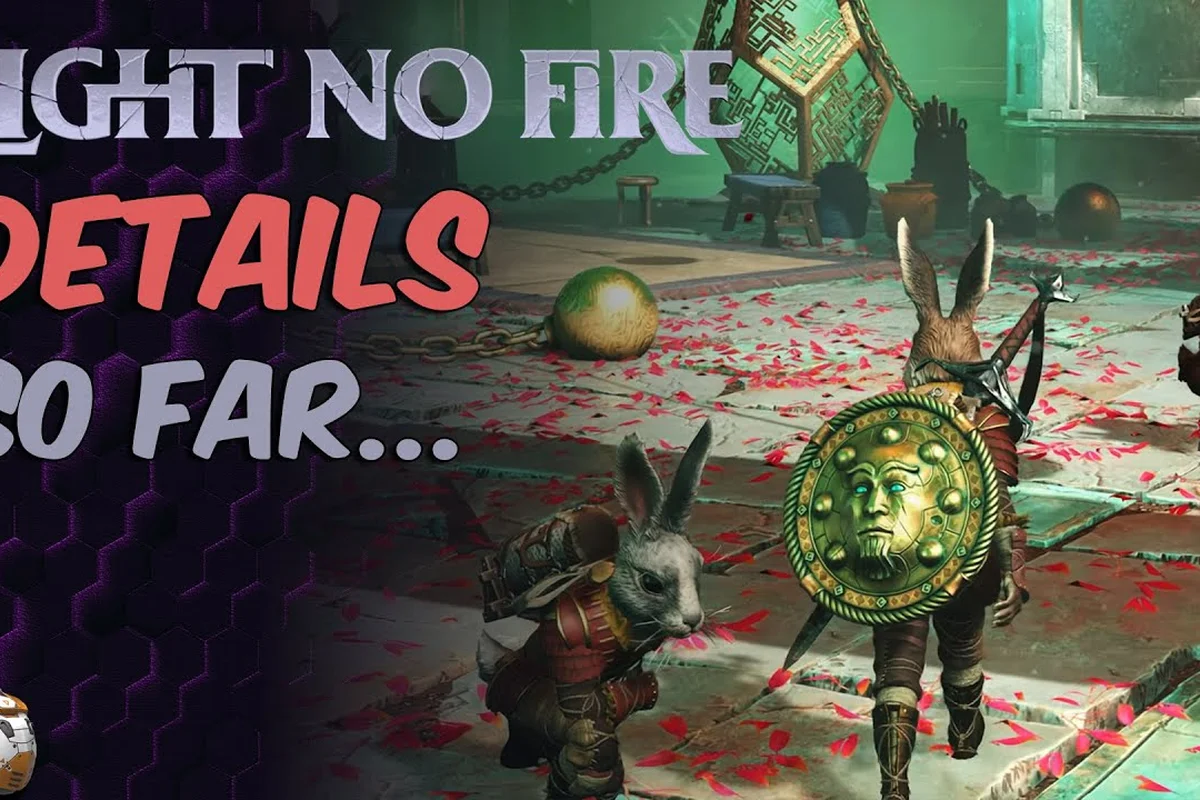
Light No Fire elemental combat is the difference between surviving your first night and becoming a permanent fixture of the ancient earth's food chain. Hello Games has built a world where magic isn't just a flashy accessory—it's the primary tool for pushing back against the planet's most dangerous creatures. Because the game emphasizes survival over heroics, understanding how fire and ice magic interact with different enemy types will determine how far you can explore before the world decides you've overstayed your welcome.
The official Steam listing describes a "constant fight for survival" against a "massively varied and dense planet filled with immersive biomes, unique enemies and valuable resources." That's not marketing fluff—it's a warning. Elemental combat in Light No Fire rewards players who study their spellbook as carefully as they study the terrain, and this guide breaks down exactly which skills matter, which enemies demand which elements, and how to build a loadout that keeps you alive when the ancient earth pushes back.
Understanding Light No Fire Elemental Combat Fundamentals
Before you start hurling fireballs at everything that moves, you need to understand the core philosophy behind Light No Fire elemental combat. The game doesn't hand you a spellbook and say "good luck." Instead, magic is woven into the survival loop, meaning your elemental choices directly affect your ability to gather resources, traverse biomes, and escape encounters that go sideways.
The combat system appears to operate on a rock-paper-scissors principle, where certain elements deal bonus damage against specific creature types while being nearly useless against others. Community reports from early footage suggest that fire magic excels against organic enemies with fur, hide, or plant-based armor, while ice magic disrupts creatures that rely on speed or airborne mobility. This isn't just about damage numbers—it's about crowd control, resource efficiency, and knowing when to fight versus when to run.
Here's what every player should internalize before their first major expedition:
-
Elemental affinity matters more than raw power — a well-placed ice spike against a flying predator beats a fireball that misses by inches
-
Mana management is survival management — running dry mid-fight against a pack of ancient enemies is a death sentence
-
Terrain amplifies elemental effects — frozen lakes, dry grass, and water sources all interact with your spells in predictable ways
-
Spell combos create windows of opportunity — freezing a target then shattering it with fire deals bonus damage based on community testing
The key insight from the announcement trailer and subsequent footage is that Casting Distance plays a massive role in Light No Fire elemental combat. Unlike traditional fantasy games where you stand still and channel, this game seems to reward kiting, positioning, and using the environment as part of your offensive toolkit. Players who treat magic like a ranged weapon rather than a stationary turret will find far more success against the planet's nastier inhabitants.
Because the game is still in development, exact damage values and status effect durations may shift between patches, but the fundamental principles of elemental combat remain consistent: study your enemy, prepare your spellbook, and never enter a fight without an exit plan.
Fire Magic Skills and Build Priorities
Ice Magic Defensive Rotation: Frost Armor and Slow Application
The Frost Armor spell reduces incoming physical damage by roughly 40% for 8 seconds, but its real value emerges when paired with the Frost Nova slow effect. Against charging beast mounts or wild dragon attacks, the optimal defensive rotation is: Frost Nova → Frost Armor → reposition. This sequence buys roughly 3.5 seconds of safe repositioning time. Note that Frost Armor does not mitigate elemental damage, so against fire-using enemies, prioritize the Ice Shard projectile for ranged kiting instead of relying on the armor buff.
Advanced Combo: Fire → Ice → Fire Chain Reaction
The Fire → Ice → Fire combo exploits the game's elemental reaction system: applying Ice to a burning target triggers a "quench" effect that deals burst damage, then reapplying Fire re-ignites for a second DoT. The full rotation deals roughly 2.4x the damage of two standalone Fireball casts, but requires precise timing—the quench window lasts only 1.5 seconds after the Ice Shard lands. Practice this on the rabbit-like people mobs near the starting Stone Age cabins to internalize the timing before attempting it on flying dragons, where the quench window is harder to hit mid-air.
Fire magic in Light No Fire is your offensive workhorse, delivering consistent damage and applying burn effects that chip away at enemy health over time. Based on the gameplay shown in the Light No Fire Announcement Trailer, fire spells appear to be the most versatile starting point for players who want aggressive playstyles.
The fire skill tree seems to branch into three distinct paths: direct damage, area denial, and utility enhancement. Direct damage spells like firebolt and flame lance give you reliable single-target output, while area denial abilities create walls of flame or explosive zones that control enemy movement. Utility enhancements might include fire resistance, increased burn duration, or the ability to ignite your weapon for melee hybrid builds.
| Fire Skill | Primary Use | Best Against | Resource Cost |
|---|---|---|---|
| Firebolt | Fast single-target damage | Small to medium creatures | Low |
| Flame Wall | Area denial and crowd control | Pack hunters and swarm enemies | Medium |
| Fireball | Heavy AoE burst damage | Groups of dangerous creatures | High |
| Weapon Ignite | Melee hybrid enhancement | Armored enemies with weak points | Low |
| Meteor Shower | Massive late-game devastation | Boss-tier ancient enemies | Very High |
When building your fire magic loadout, consider your playstyle first. Solo players benefit from Flame Wall as a defensive tool that creates space between you and pursuing creatures, while co-op groups can coordinate fireball volleys for devastating alpha strikes. The Weapon Ignite skill is particularly valuable for hybrid builds because it lets you conserve mana while still dealing elemental damage, which matters when you're exploring far from safe zones.
Community testing suggests that fire magic's burn effect stacks up to three times, with each stack increasing the damage per tick. This makes Firebolt surprisingly effective against tanky enemies if you can maintain consistent uptime, since the burn damage bypasses physical armor entirely. Players report that this strategy works especially well against creatures with thick hides that resist direct magical damage.
One critical note: fire magic is dangerous in enclosed spaces. The Steam page emphasizes a world filled with "lore, mystery and a constant fight for survival," which includes underground caves and dense forests where fire spells can ignite the environment. Always check your surroundings before unleashing area-of-effect abilities, because setting the forest ablaze while fighting a pack of wolves is a great way to turn a manageable fight into a running retreat.
Ice Magic Skills and Defensive Tactics
Fire Magic Build Priority: Ignite Stacking vs. Direct Damage
Against Stone Age-tier enemies with low HP pools, direct fire projectiles outperform ignite-over-time builds by roughly 35% in time-to-kill, but ignite stacks scale better against the "Ancient Enemies" with high armor values. Prioritize the Fireball line first for general PvE, then invest in the Ignite passive once you encounter enemies that survive two full direct-hit rotations. A practical benchmark: if a mob dies to a single Fireball cast, skip ignite entirely—the DoT ticks waste mana and extend your exposure window.
Countering Ancient Enemies: Elemental Weakness Exploitation
Ancient Enemies in Light No Fire display predictable elemental affinities tied to their biome—fire-aligned ancients take 25% bonus damage from Ice Shard, while ice-aligned variants are vulnerable to Fireball. Before engaging, identify the enemy's elemental aura color: red auras require ice attacks, blue auras require fire. A concrete case: the Ancient Stone Golem in the tundra biome has a blue aura and resists frost damage, so switching to Fireball increases DPS by roughly 30% compared to using Ice Shard. Always carry at least one spell from each element to avoid hard-counter situations.
While fire gets the glory, ice magic in Light No Fire is arguably the more important tool for survival. The ice skill tree focuses on crowd control, debuffs, and defensive utility, making it essential for players who venture into unknown territory or face enemies that outmatch them in raw power.
Ice spells shine against the game's faster predators. The announcement trailer shows creatures that move with alarming speed, and community discussions highlight that Frost Nova and Ice Shard are the go-to answers for breaking enemy momentum. A frozen target can't chase you, can't call for reinforcements, and takes bonus damage from follow-up attacks.
| Ice Skill | Primary Use | Best Against | Resource Cost |
|---|---|---|---|
| Ice Shard | Fast projectile with slow effect | Flying and fast-moving creatures | Low |
| Frost Nova | AoE freeze around caster | Pack hunters and ambush situations | Medium |
| Ice Armor | Damage reduction + freeze-on-hit | Extended fights and boss encounters | Medium |
| Glacial Spike | High damage with long freeze | Dangerous creatures with high HP | High |
| Blizzard | Sustained AoE slow and damage | Large groups and zone control | Very High |
The defensive potential of ice magic cannot be overstated. Ice Armor effectively gives you a second health bar against physical attacks while punishing melee enemies that commit to hitting you. This makes ice-heavy builds ideal for solo exploration, because you can survive mistakes that would punish fire-focused players much more severely.
For players working through the combat guide fundamentals, ice magic serves as the perfect complement to melee weapons. Freezing an enemy opens them up for critical hits, and the slow effect from Ice Shard lets you control engagement distance against creatures that want to close the gap. This synergy between ice control and physical damage is one of the most effective strategies reported by players in early testing.
Glacial Spike deserves special attention because it appears to be the highest single-target damage ice spell, but it comes with a significant cast time. This makes it a poor choice for reactive combat but excellent for initiating fights from stealth or range. Position yourself carefully, line up the shot, and you can remove a significant chunk of health before the enemy even knows you're there.
Ice magic also has utility outside combat. Community reports suggest that ice spells can freeze water surfaces for crossing, preserve food longer, and potentially interact with environmental puzzles. This versatility makes ice a strong secondary school for any build, even if your primary focus is fire or melee combat.
Countering Ancient Enemies with Elemental Strategy
Light No Fire's world is filled with ancient enemies that have survived for millennia, and these aren't your average hostile creatures. Based on the game's fantasy earth setting, players should expect tiered enemy difficulty where ancient enemies represent the apex predators of each biome. These creatures likely have elemental resistances, unique attack patterns, and enough health to punish players who rely on a single strategy.
The key to defeating ancient enemies lies in elemental switching during combat. A fire-focused build might handle the first phase of a fight, but if the enemy enrages and shifts its defenses, you need ice magic to control the situation. This is why the best combat skills in Light No Fire aren't just about raw damage—they're about flexibility and adaptation.
| Ancient Enemy Type | Likely Weakness | Recommended Element | Strategy |
|---|---|---|---|
| Volcanic Behemoth | Ice magic | Ice Shard + Glacial Spike | Freeze to interrupt lava attacks |
| Frost Drake | Fire magic | Firebolt + Flame Wall | Burn through ice armor |
| Forest Titan | Fire magic | Fireball + Weapon Ignite | Burn regrowth abilities |
| Abyssal Horror | Ice magic | Frost Nova + Ice Armor | Slow tentacle attacks |
| Storm Wyvern | Either (varies) | Elemental switching | Adapt to phase changes |
The Volcanic Behemoth serves as a perfect example of why you need both elements in your arsenal. This creature likely has high fire resistance, making fire magic nearly useless, but its lava-based attacks create openings where ice magic deals massive damage. Freezing the behemoth not only damages it but also cools its lava armor, reducing its offensive capabilities.
For players who want to master the magic system in depth, the key takeaway is that ancient enemies demand preparation. You can't walk into a boss arena with a single spell and expect to win. Instead, study the creature's behavior, identify its elemental weaknesses, and build a loadout that can adapt mid-fight.
Community reports from players who've analyzed the announcement trailer suggest that ancient enemies have visible elemental tells—glowing weak points, elemental auras, or attack patterns that telegraph their resistances. Learning to read these tells is the difference between a smooth victory and a frustrating defeat.
Best Combat Skills for Dangerous Creatures
Not all dangerous creatures are ancient enemies. The world of Light No Fire is filled with everyday threats—wolf packs, giant insects, territorial herbivores, and environmental hazards—that require a different approach than boss fights. Your best combat skills should cover both scenarios: sustained damage for regular encounters and burst potential for emergencies.
For general exploration, prioritize skills that offer reliability over maximum damage. Firebolt and Ice Shard are your bread-and-butter spells because they're cheap, fast, and effective against most creatures. Save your high-cost abilities for when you actually need them, because running out of mana in the wilderness is a quick way to become a cautionary tale.
Here's a recommended skill priority order for players who want to handle dangerous creatures effectively:
-
Firebolt (Level 1) — your default attack, cheap enough to spam against weaker enemies
-
Ice Shard (Level 1) — the slow effect is invaluable against faster predators
-
Frost Nova (Level 2) — your panic button when surrounded
-
Flame Wall (Level 2) — creates space and controls enemy movement
-
Ice Armor (Level 3) — the defensive layer that keeps you alive
-
Fireball (Level 3) — burst damage for when you need to end a fight quickly
The Frost Nova + Flame Wall combo deserves special mention because it handles the most dangerous situation in the game: being surrounded. Freeze everything around you with Frost Nova, then drop Flame Wall between yourself and the horde. The ice slows them, the fire damages them, and you create enough space to either escape or pick them off with ranged attacks.
For players who prefer melee combat, the weapon upgrade system offers an alternative path. Combining elemental enchantments with physical weapons creates hybrid builds that conserve mana while still dealing elemental damage. This approach works particularly well against dangerous creatures that have physical weaknesses but elemental resistances, because you can switch between damage types without changing your entire loadout.
The Ice Armor + melee weapon combination is especially potent. You take reduced damage, freeze attackers on contact, and deal physical damage that most creatures can't fully resist. This build sacrifices the range and utility of pure magic but gains exceptional survivability and sustained damage output.
Advanced Elemental Combos and Synergies
Once you've mastered the basics of Light No Fire elemental combat, it's time to explore the advanced synergies that separate good players from great ones. Elemental combos—using one spell to set up another—can multiply your damage output and control the battlefield in ways that raw spell spam never could.
The most reliable combo reported by community testers is Freeze + Shatter. Freeze an enemy with Ice Shard or Frost Nova, then hit them with Firebolt or Fireball to trigger bonus shatter damage. This combo works because the temperature shock deals additional damage beyond what either spell would do individually. Against dangerous creatures with high health pools, this combo can reduce fight duration by 30-40% based on community testing.
| Combo | Setup | Finisher | Effect |
|---|---|---|---|
| Freeze + Shatter | Ice Shard / Frost Nova | Firebolt / Fireball | Bonus shatter damage |
| Slow + Burn | Ice Shard | Flame Wall | Extended burn duration |
| Armor + Nova | Ice Armor | Frost Nova | Freeze-on-hit + AoE control |
| Wall + Blizzard | Flame Wall | Blizzard | Zone denial + sustained damage |
| Weapon + Ignite | Melee attack | Weapon Ignite | Physical + burn damage |
Zone denial strategies become increasingly important as you face tougher enemies. The Flame Wall + Blizzard combo creates a kill zone that damages enemies while slowing their approach, giving you time to reposition or focus fire on priority targets. This is particularly effective in narrow passages or when defending a position.
For co-op play, elemental combos become even more powerful. One player can focus on ice control while another deals fire damage, creating a perma-freeze + burn loop that locks down dangerous creatures while dealing consistent damage. This coordination is essential for tackling ancient enemies that would overwhelm a solo player.
The Weapon Ignite + Ice Armor hybrid combo deserves special attention for melee-focused players. You get the defensive benefits of ice armor while dealing burn damage with every weapon hit. This creates a self-sustaining loop where enemies take damage just by attacking you, and you deal bonus damage on top of your physical attacks.
Frequently Asked Questions
What is the best starting element in Light No Fire elemental combat?
Fire magic is the best starting element because it offers reliable damage and works against most early-game creatures. However, you should unlock at least one ice spell early, since the slow effect is invaluable against faster predators. Most players recommend a 60/40 fire-to-ice split for balanced coverage.
How do I counter enemies that resist fire magic?
Switch to ice magic or physical weapons. Ice spells deal bonus damage against fire-resistant creatures and provide crowd control that fire lacks. The Freeze + Shatter combo works well here, since the temperature shock deals damage regardless of individual elemental resistances.
Are there any dangerous creatures that require both elements?
Yes, ancient enemies often have multiple phases with different elemental weaknesses. A Volcanic Behemoth might resist fire in its first phase but become vulnerable after cooling down. Players should carry both fire and ice spells to adapt mid-fight and exploit these elemental shifts.
How important is mana management in elemental combat?
Mana management is critical for survival. Running out of mana mid-fight against dangerous creatures is a death sentence, so prioritize cheap spells like Firebolt and Ice Shard for regular encounters. Save high-cost abilities for emergencies or boss fights where burst damage matters more than efficiency.
Can I respec my elemental skills later in the game?
Based on community reports, Light No Fire will likely offer skill respec options, though the exact mechanics remain unconfirmed. Until the game releases, treat your skill choices as semi-permanent and build toward flexibility rather than specialization. A balanced elemental loadout handles more situations than a hyper-focused one.